For Organizations

Better decisions about senior talent. Executives prepared for what those decisions require.

The Positioning House works with organizations on both sides of the same equation: what decision makers need to know about their senior leaders, and what those leaders need to demonstrate and be ready to own.

Does the executive talent you have today translate into what the business will need next?

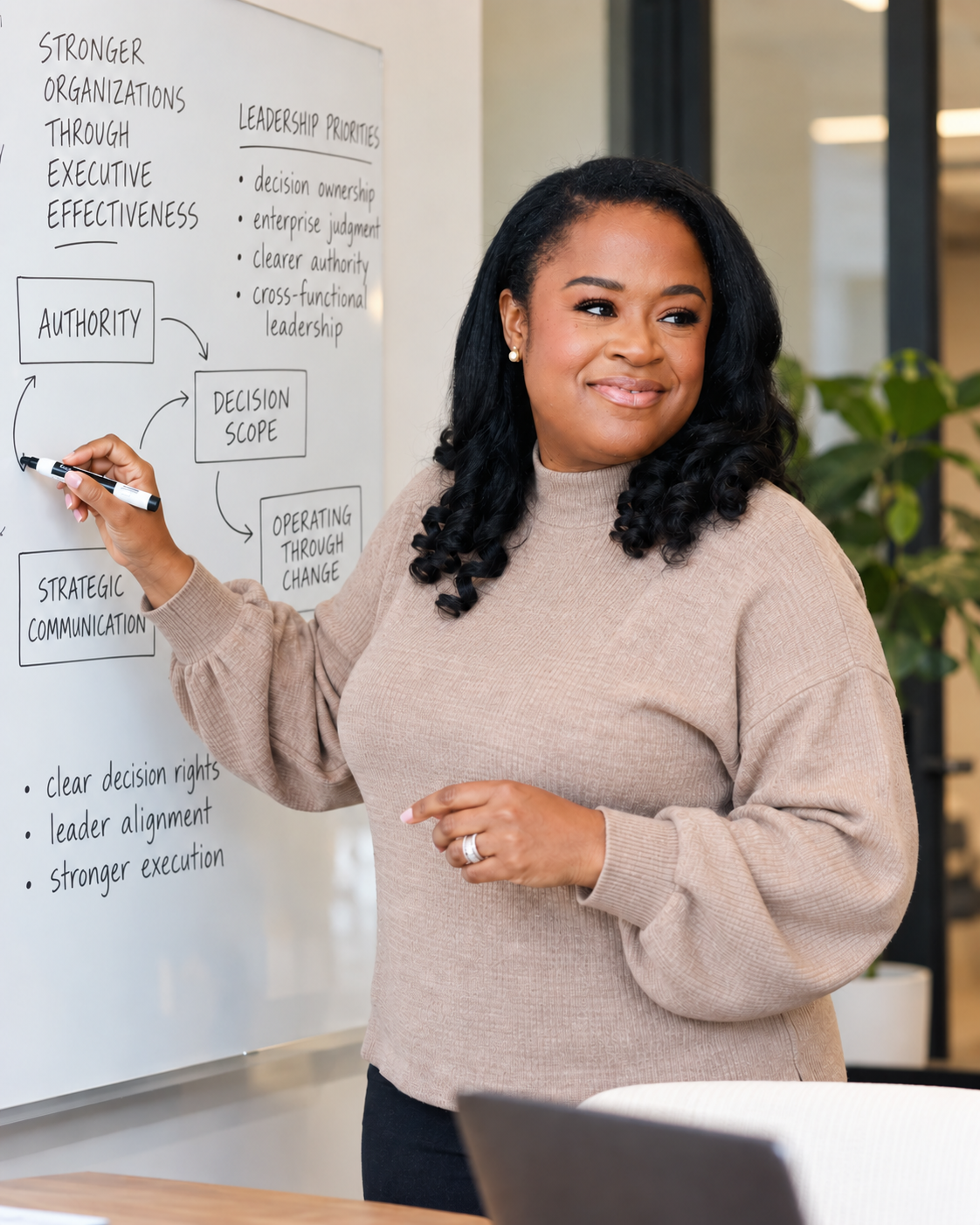
Alicia Perkins working with senior executives in an organizational session

Where We Help

The talent decisions organizations bring to us.

  • Succession decisions where the results are clear, but broader readiness is still being judged
  • Newly expanded roles where accountability has increased faster than authority or mandate
  • Strong functional executives being considered for enterprise responsibility
  • Leadership transitions where a new CEO or executive team is reassessing senior talent
  • Reorganizations that change which parts of an executive's experience matter most
  • Executive populations that need to show stronger judgment, ownership, and business reasoning at the next level
  • Decision makers who need a clearer read on what their senior leaders are actually ready to own next

In every one of these situations, two questions sit together:

What does the business need to know before it decides, and what does the executive need to be ready to own once it does?

The Executive Signal System, applied to talent decisions

Four things decision makers need to be clear on.

The Executive Signal System is the methodology underneath everything we do. Inside organizations it resolves into four questions we use whether we are advising on a talent decision or preparing the executive for the responsibility that decision carries.

01

Business Relevance

Is this leader's experience connected to the problems the business now needs solved, and to where the organization is going next?

02

Evidence

What proves they can operate at broader scope? The decisions, judgment, results, and influence a succession or promotion case actually rests on.

03

Interpretation

How are decision makers currently reading this leader, and where does that reading differ from what the leader is capable of owning?

04

Range

Can the leader operate beyond the function, mandate, or environment where they built their reputation, and under conditions that keep changing?

Ways to Bring The Positioning House Into Your Organization

Start with a defined executive need. Each engagement can be adapted to your organization, executive population, and business context.

01

Executive Sessions & Workshops

Focused executive education around one defined leadership need.

Bring The Positioning House in for a leadership summit, executive population, succession group, or senior-talent program.

  • Executive judgment and decision-making
  • Communicating recommendations and business reasoning
  • Authority and decision rights
  • Preparing for broader enterprise responsibility
  • Executive reputation and how leadership is interpreted
  • Leading through changes in mandate, structure, or senior leadership

Organizations leave with a shared way of thinking about the issue, practical tools executives can apply immediately, and language that can continue inside the business.

Starting investment: $25,000

02

Executive Development Programs

A deeper development experience for a defined executive or succession population.

These programs combine Positioning House methodology, executive education, application, and tools around the leadership demands the organization is preparing executives to meet.

  • Preparing VPs for broader enterprise leadership
  • Strengthening executive judgment and communication
  • Developing succession candidates
  • Helping newly elevated executives establish authority and mandate
  • Preparing senior leaders for organizational change or expanded responsibility

The program is built around the organization's actual executive population and business priorities, rather than a generic leadership curriculum.

Starting investment: $60,000

03

Enterprise Executive Systems

Bring Positioning House tools and methodology inside your existing talent strategy.

Organizations can provide selected executive populations with access to Positioning House systems for structured, self-directed application.

  • Executive communication
  • Selection
  • Leadership interpretation
  • Authority
  • Executive readiness

Systems can stand alone or be paired with a live executive session or development program.

Custom enterprise investment

Need a More Custom Engagement?

Executive Talent Advisory

For organizations working through a more specific senior-talent question, The Positioning House also provides advisory around executive readiness, succession, changing leadership requirements, expanded responsibility, and organizational transitions.

These engagements may include stakeholder consultation, executive assessment, recommendations, and targeted advisory.

Who This Work Is For

Executives and executive pipelines.

Our organizational work is designed for companies developing and supporting:

  • 01

    Vice Presidents and executives

  • 02

    Succession candidates

  • 03

    High-potential senior talent

  • 04

    Newly elevated executives

  • 05

    Enterprise leadership cohorts

  • 06

    Executives navigating expanded or changing mandates

  • 07

    Leadership teams moving through transformation or restructuring

Alicia Perkins, founder of The Positioning House

Why The Positioning House

We work at the intersection of what the business needs and how its executives are being read.

That intersection is where many senior-talent decisions become difficult. The business is clear enough about what it needs. What is less clear is whether a given leader can produce it, and whether the way that leader is currently understood inside the company reflects what they are actually capable of owning.

Alicia Perkins spent more than 15 years in recruiting, executive placement, and talent management, in the rooms where leaders were assessed, selected, promoted, and passed over. She has since advised more than 400 leaders privately.

That gives us a view of both sides at once: the evidence a decision maker needs, and what the executive has to demonstrate to make the decision an easy one.

Start a Conversation

Every engagement begins with your business context.

We start by understanding the business context, the executive population involved, and what needs to be different as a result of the work.